How can my business become pet friendly in 2027?
10 min read
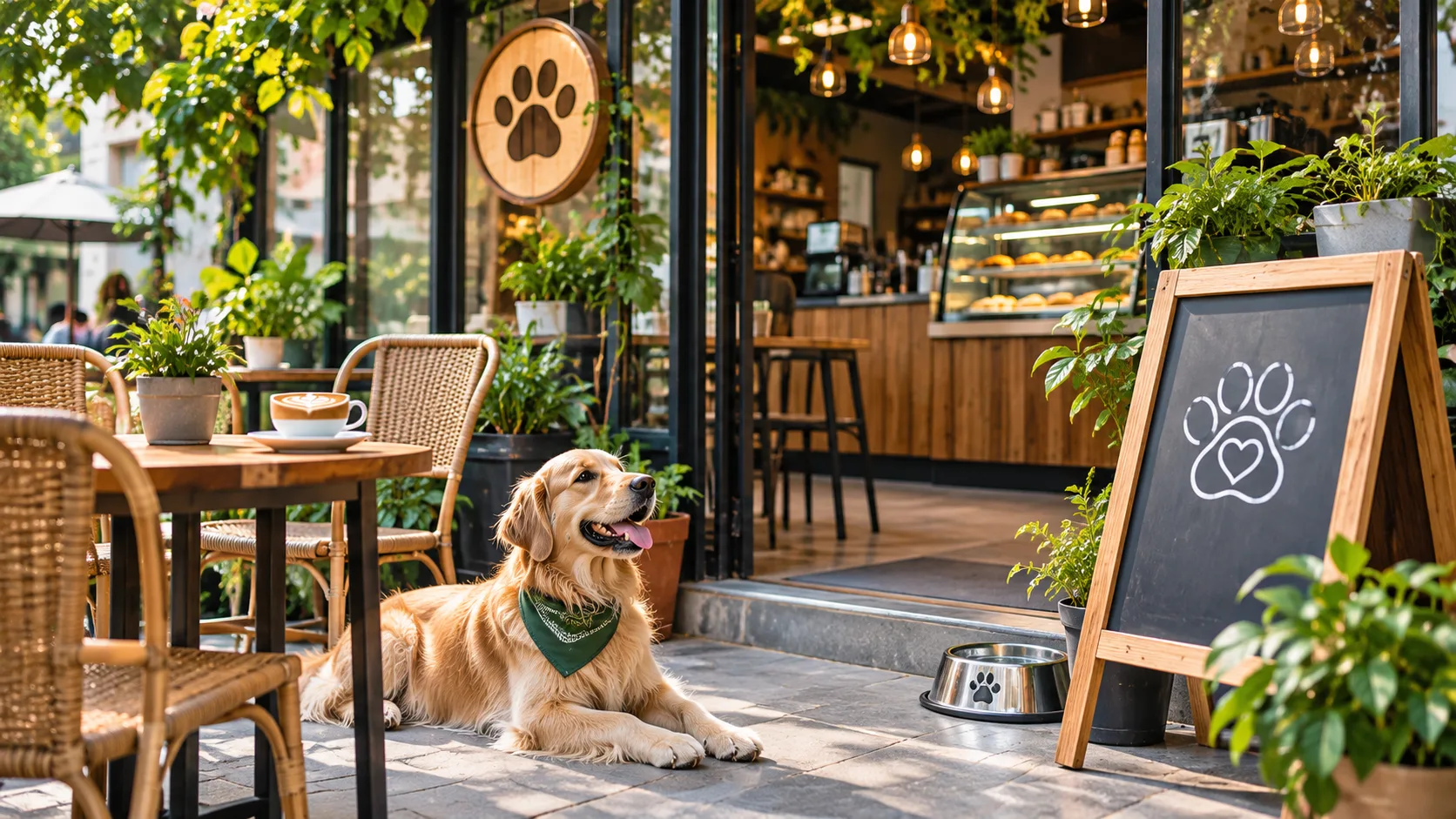
More guests ask whether they can enter with a dog or cat. Saying “yes” with a sticker is not enough: if the team improvises, if there is no water, or if rules change by shift, the visit becomes a problem for the venue and for the pet parent. Being a pet-friendly business is an operations decision, not only marketing.
This guide is for owners and teams of cafés, restaurants, hotels, and other spaces that want to welcome pets well: clear rules, space prep, staff training, and how to show up on a map where people already search for pet-friendly places.
What it means to be a pet-friendly business
A business is pet friendly when guests can enter with their dog or cat and stay a while without asking it as a favor. There is a real place to settle, written or easy-to-explain rules, water when needed, and a team that already knows what to answer.
It is not the same as pets allowed. Pets allowed often means tolerance—sometimes patio-only, with a size limit or improvised fee. Pet friendly means you adapted something in space or service so the visit works.
Why it helps your business
- Real demand: more people search for cafés, restaurants, and hotels where pets can stay.
- Repeat visits: pet parents often return to places that already worked.
- Clearer operations: defined rules reduce door conflicts between shifts and tables.
Define clear rules before you put up the sign
Write where pets can sit, leash expectations, size or number limits, and what happens if an animal disturbs others. Publish the policy on your profile and at the entrance.
How to adapt the space (café, restaurant, hotel)
- Mark a calm seating zone with floor space for a mat.
- Offer water bowls or a refill station.
- Keep walk paths clear so leashes do not block service.
- In hotels: list pet rooms, fees, and nearby walk routes.
Train the team (this is what sustains the policy)
Everyone at the door should give the same answer. Short scripts for indoor vs patio, fees, and “what if the dog barks” prevent awkward improvisation.
Hygiene, safety, and coexistence
Have a clean-up plan, allergy awareness for nearby tables, and a polite exit path if a pet cannot settle. Safety for guests without animals matters as much as welcome for those with pets.
How to publish your place
List your rules on your site and on pet-friendly maps. Honest photos and recent detail beat a paw icon with no context.
Frequently asked questions
Do I need a special license?
Rules vary by city. Check local health and hospitality regulations before advertising indoor access.
Should I charge a pet fee?
Optional. If you charge, state the amount and what it covers (cleaning, kit). Surprise fees hurt reviews.
What if a guest without a pet complains?
Zoning and clear seating help. Offer alternatives and enforce leash/settling rules consistently.
Can we accept cats as well as dogs?
Yes if you define carrier rules and short visits. Many venues start dog-first and expand later.
In summary
Pet-friendly businesses combine clear rules, basic comfort (water, shade, space), and trained staff. Publish your policy, keep reviews honest, and treat the experience—not only the sticker—as the product.